| Status: | Active, open to new members |
| Contact: | |
| Contact: | |
| When: | Monthly on Mondays 10:30 am 2nd Monday |
| Venue: | Brinsley Parish Hall |
Provisional Schedule for 2026
| Date | Topic /Activity | Leader |
| January 12th | Disappearing Shops | Everyone |
| February 9th | Brinsley Pubs | Helen |
| March 9th | Lost Businesses | Everyone |
| April 13th | History of Trams - Ripley rattler / Local Gentry | Alan /Madeleine |
| May 11th | The Pentrich Revolution | Jim |
| June 8th | Bennerley Viaduct visit /talk | Janet |
| July 13th | Local Chapels / Churches | Everyone |
| August 10th | No meeting | |
| September 14th | The Temple Estate | Richard & Diana |
| October 12th | Planning meeting | Everyone |
| November 9th | War Memorials | Everyone |
| December 14th | TBC |
Recent Topics discussed included
The Temple Estate - Commissioned in 1757 by Charles Sedley, The Nuthall Temple was designed by Thomas Wright in the fashionable Palladian style, surrounded by an idyllic, natural landscape rather than traditional formal gardens. The grand estate was defined by a central hall featuring a striking 78-foot-high dome. Operating the house and its three estate farms—Villa Farm, Home Farm, and Assarts Farm—required a vast workforce, including nine indoor servants and numerous outdoor labourers.
Without a standard heir, Charles Sedley passed the entire estate to Elizabeth, his recognized daughter with "Miss Wood" of Eastwood. Following his death, Elizabeth's husband legally changed his surname to Sedley to fulfill the conditions of Charles's will. However, this name change proved temporary, as the Sedley lineage was ultimately discontinued when he later ascended to the title of Lord Sudbury.
In 1819, the house was bought by the Holden family, who were well established in Derbyshire.
The last owner to live there was the Reverend Robert Holden, but on his death in 1926, his son,
decided he could not afford to retain it in the light of death duties and put it up for auction.
At first it would not sell, but eventually the estate was sold in parcels, and the house went
for a mere £800.
The house contents were sold at auction in 1927 and in 1929 the house was demolished. The subsequent arrival of the motorway has now cut Nuthall into two, and it is interesting to contemplate what the village would have been if the Temple had been preserved.
There are still a few relicsof the house preserved in Nuthall: the Gate Pier at the
entrance to the Three Ponds, and a summer house in one of the gardens along Kimberley Road
Local Chapels / Churches - At this meeting, we shared ideas about local churches and chapels. We discussed how some villages had lost many of their original churches, whereas in others, new denominations flourish, like the New Horizons Christian Centre at Langley Mill.
The Churches looked at included ranged from the very old to the relatively new such as the 13th century Nuthall Church and the 20th century Nuthall Methodist Church. We learnt that in the 17th century, a significant number of Quakers were living in Eastwood, although a meeting
house was eventually built nearby. Many of the local churches were non-conformist and the proliferation of chapels in Kimberley and Eastwood reflected the fact that the Methodist Church split in 1800 into two factions – Primitive and Wesleyan. The two halves of the church were re-united in 1932, and thus many of the chapels became redundant. Some of the chapels have been demolished, and others have been re-purposed e.g. Elite Carpets in Eastwood, or
turned into single / multiple dwellings e.g. Kimberley St. Paul’s at the top of James Street.
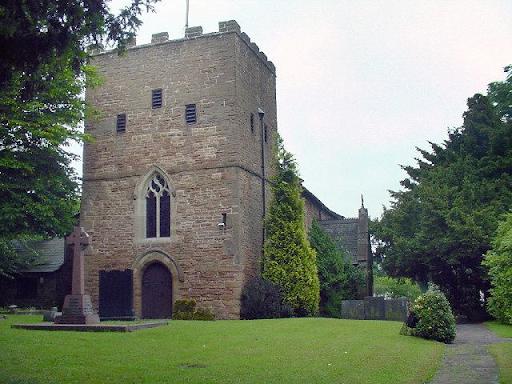
Chapel on the Hill in Kimberley
In July, we visited the Chapel on the Hill in Kimberley, which is situated at the top of the cemetery. It was built in 1883 and designed by Richard Charles Sutton, who as a young
architect was given the job of constructing the scaffolding for the last public execution in Nottingham in 1864.
This building's purpose was to be a mortuary chapel and there is a glass screen which was designed to protect the mourners from the body in case it was diseased and the original blue tiles were thought to keep flies at bay.